Hormone Therapy Clinic Hazlet NJ: Understanding Your Hormone Treatment Options
Learn about hormone therapy options, benefits, risks, HRT, bioidentical hormones, and menopause treatment at a hormone therapy clinic in Hazlet, NJ.
Hormonal changes can affect many areas of daily life. For women going through perimenopause or menopause, changing estrogen and progesterone levels may contribute to hot flashes, night sweats, vaginal dryness, sleep difficulties, and other symptoms. These changes are natural, but that does not mean you have to ignore symptoms that interfere with your quality of life.A Hormone therapy clinic Hazlet NJ can provide an opportunity to discuss symptoms, medical history, treatment goals, and available hormone therapy options with a qualified healthcare professional. Hormone therapy can be appropriate for some people, but it is not suitable for everyone and should be individualized.The FDA states that approved menopausal hormone therapies can help relieve symptoms such as hot flashes, night sweats, vaginal symptoms, and may help prevent bone loss in appropriate patients.
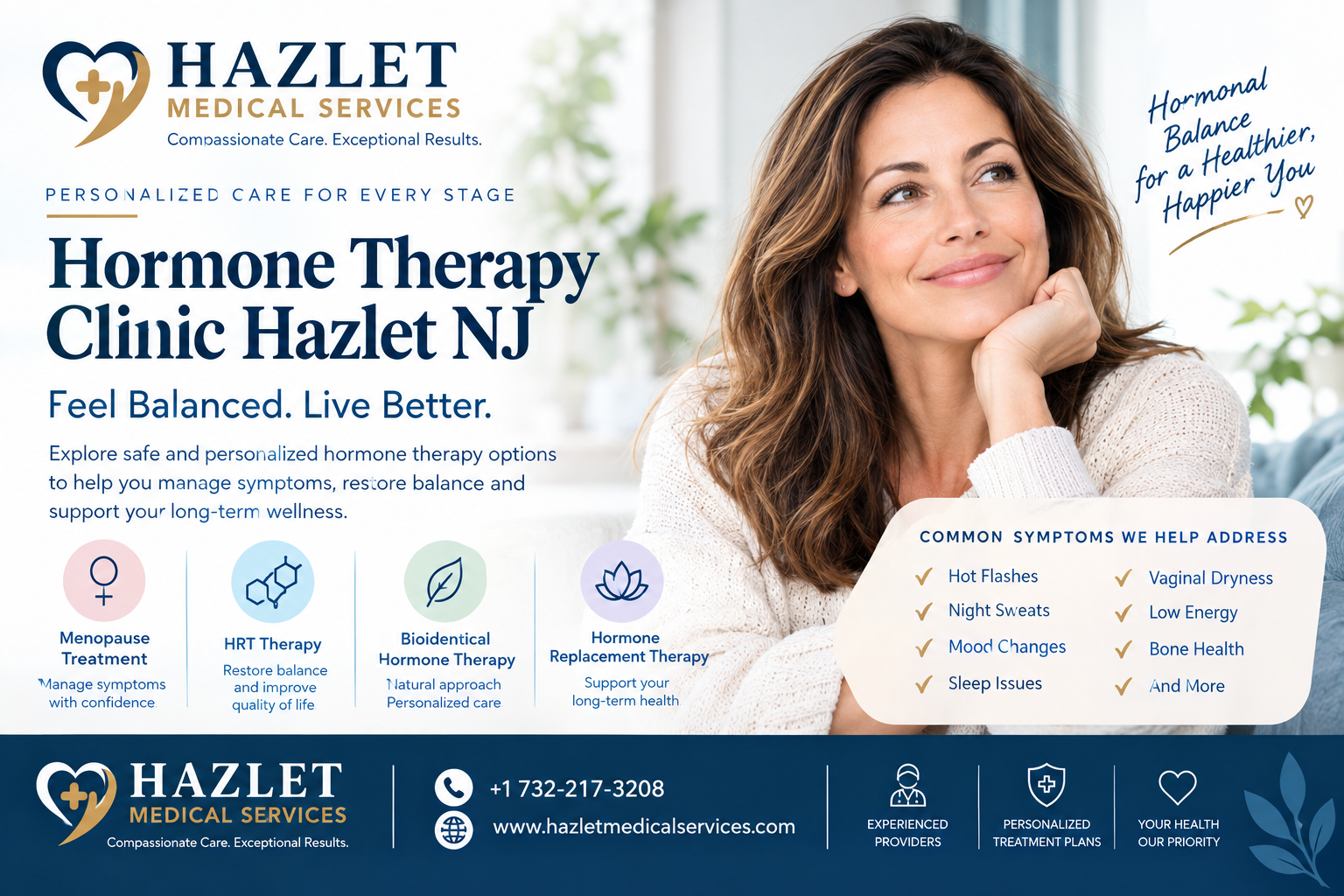
What Is Hormone Therapy?
Hormone therapy, sometimes called menopausal hormone therapy or hormone replacement therapy (HRT), involves using prescription hormones to address certain symptoms associated with declining hormone levels.During menopause, the ovaries gradually produce less estrogen and progesterone. This transition can lead to symptoms that vary significantly from one person to another.Hormone therapy may involve estrogen alone or estrogen combined with a progestogen. For women who still have a uterus, a progestogen is generally used with systemic estrogen to help protect the uterine lining. Local vaginal estrogen is another option for certain vaginal symptoms.A consultation at a Hormone therapy clinic Hazlet NJ can help determine whether hormone therapy is appropriate based on your symptoms, medical history, age, risk factors, and treatment goals.
Common Symptoms of Hormonal Changes
Hormonal changes do not affect everyone in the same way. Some women have very few symptoms, while others experience symptoms that significantly affect their daily routines.Common menopause-related symptoms can include:
- Hot flashes
- Night sweats
- Vaginal dryness
- Pain or discomfort during sexual activity
- Changes in menstrual periods
- Sleep disruption
- Mood changes
- Bone loss
- Genitourinary symptoms
The FDA identifies hot flashes, night sweats, vaginal changes, and bone loss among the important symptoms and health concerns associated with menopause.If symptoms are persistent or disruptive, speaking with a healthcare professional can help identify appropriate treatment options.
Hormone Therapy Hazlet NJ
People searching for Hormone Therapy Hazlet NJ are often looking for personalized care rather than a one-size-fits-all treatment.Hormone therapy is not simply about replacing hormones at a predetermined dose. Treatment decisions can involve reviewing your symptoms, medical history, medications, family history, previous medical conditions, and personal risk factors.Your healthcare provider may discuss:
- The symptoms you are experiencing
- How symptoms affect your daily life
- Whether you still have a uterus
- Your menstrual and menopause history
- Current medications
- Previous blood clots or cardiovascular problems
- Certain cancer histories
- Liver conditions
- Other relevant health concerns
This information helps your provider determine whether hormone therapy is appropriate and which treatment options may be considered.
HRT Therapy Hazlet NJ: What Options Are Available?
HRT therapy Hazlet NJ may involve different forms of hormone treatment.Depending on the individual's needs, FDA-approved hormone therapy can be available in forms such as:
- Pills
- Patches
- Gels
- Sprays
- Vaginal creams
- Vaginal tablets or inserts
- Vaginal rings
Systemic hormone therapy can circulate throughout the body and may be used for symptoms such as moderate-to-severe hot flashes and night sweats. Local vaginal estrogen is generally used for symptoms affecting the vaginal area.The appropriate option depends on the person's symptoms and medical circumstances.
Estrogen Therapy
Estrogen is the primary hormone used to treat many menopause-related symptoms.Estrogen therapy may help relieve:
- Hot flashes
- Night sweats
- Vaginal dryness
- Pain during sexual activity
- Certain genitourinary symptoms
Estrogen therapy can also help prevent bone loss in appropriate patients.For women who have a uterus, systemic estrogen alone can increase the risk of endometrial cancer. A progestogen is generally added to reduce that risk.Because treatment decisions depend on individual circumstances, hormone therapy should be discussed with a qualified healthcare professional.
Bioidentical Hormone Therapy Hazlet
The term bioidentical hormone therapy Hazlet is commonly used when discussing hormones that have the same molecular structure as hormones naturally produced by the body.It is important to distinguish FDA-approved hormone products from compounded hormone preparations. The FDA states that it has approved certain hormone products that are chemically identical to naturally occurring hormones. However, many compounded products marketed as “bioidentical hormones” are not FDA-approved, and the FDA states that it does not have evidence that compounded bioidentical hormones are safer or more effective than FDA-approved hormone therapy.Patients should ask exactly which product is being recommended and whether it is FDA-approved.
Hormone Replacement Therapy Near Me
When searching for hormone replacement therapy near me, it is useful to look beyond convenience and consider the quality of the consultation and follow-up care.A good consultation should give you the opportunity to discuss:
- Your symptoms
- Treatment benefits
- Possible risks
- Available hormone formulations
- Dosage considerations
- Follow-up requirements
- Non-hormonal alternatives
- Questions or concerns about treatment
The FDA recommends discussing the benefits and risks of hormone therapy with a healthcare provider and using FDA-approved hormone therapies when appropriate.
Menopause Treatment Hazlet
Menopause treatment Hazlet may involve hormone therapy, non-hormonal medications, lifestyle strategies, or a combination of approaches.Hormone therapy is not automatically the best option for every woman. Some women may prefer or require non-hormonal treatment because of medical history, contraindications, personal preferences, or other considerations.The FDA notes that women with certain conditions—including certain cancers, unexplained vaginal bleeding, previous blood clots, stroke, heart attack, or liver disease—may not be appropriate candidates for menopausal hormone therapy.That is why an individualized medical evaluation is important before beginning treatment.
Potential Benefits of Hormone Therapy
When appropriately prescribed, hormone therapy may provide meaningful symptom relief for eligible patients.Potential benefits can include:
Relief From Hot Flashes
Hot flashes can be one of the most disruptive symptoms of menopause. FDA-approved hormone therapy can help reduce moderate-to-severe hot flashes and night sweats.
Help With Vaginal Symptoms
Declining estrogen levels can contribute to vaginal dryness and discomfort. Local vaginal estrogen and certain systemic therapies may help address appropriate symptoms.
Bone Health
Menopause can contribute to accelerated bone loss. Hormone therapy can help reduce bone loss and is approved for prevention of postmenopausal osteoporosis in appropriate situations.
Improved Daily Comfort
When troublesome symptoms improve, some people may find it easier to sleep, work, exercise, and participate in everyday activities. However, individual responses vary.
Understanding the Risks
Hormone therapy has benefits and risks, and those risks can differ depending on factors such as age, timing of treatment, formulation, dose, route of administration, and individual health history.Potential risks can include blood clots, stroke, gallbladder disease, and certain cancer risks. For women with a uterus, systemic estrogen without appropriate progestogen increases the risk of endometrial cancer.In February 2026, the FDA approved labeling changes for six menopausal hormone therapy products, including changes to boxed-warning language concerning cardiovascular disease, breast cancer, and probable dementia. Importantly, the FDA did not remove all safety information from product labeling, and treatment decisions still require individualized consideration of benefits and risks.This is an evolving area of medicine, making professional consultation particularly important.
Is Hormone Testing Always Necessary?
Many people assume that hormone blood tests are required before starting menopause treatment.In typical menopause care, hormone levels can fluctuate substantially, and treatment decisions may instead be based on symptoms, menstrual history, medical history, and other clinical information.Testing may still be appropriate in certain situations when a healthcare professional is evaluating symptoms or considering other possible causes.Rather than ordering tests simply because they are marketed as necessary, patients should ask their provider what information is actually needed to make a treatment decision.
What to Expect at a Hormone Therapy Consultation
A consultation at a Hormone therapy clinic Hazlet NJ may begin with a detailed discussion about your symptoms and health history.Your provider may ask about:
- Your current symptoms
- Menstrual and menopause history
- Current medications and supplements
- Previous medical conditions
- Family medical history
- Blood pressure and cardiovascular risk
- Previous blood clots or stroke
- Certain cancer histories
- Your treatment goals
- Previous hormone therapy experiences
The provider can then discuss possible treatment approaches and explain expected benefits, risks, and follow-up.
What Questions Should You Ask?
Before beginning hormone therapy, consider asking:
- Is hormone therapy appropriate for me?
- What symptoms could treatment help?
- What type of hormone therapy is being recommended?
- Is the medication FDA-approved?
- What are the potential side effects?
- What risks apply specifically to my health history?
- How will the treatment be monitored?
- Are there non-hormonal alternatives?
- How long might treatment be needed?
- When should I schedule follow-up?
Being informed can help you participate actively in decisions about your healthcare.
Why Personalized Hormone Care Matters
Hormone therapy is not a universal treatment.Two people with similar symptoms may have very different medical histories and therefore require different approaches. A healthcare professional may need to consider age, symptoms, medications, reproductive history, cardiovascular risk, cancer history, and other factors before recommending treatment.The FDA also emphasizes that menopause treatment should be discussed with a healthcare provider because hormone therapy is not appropriate for everyone.Personalized care allows treatment decisions to be based on the individual rather than on a standard formula.
Choosing a Hormone Therapy Clinic in Hazlet, NJ
If you are researching a Hormone therapy clinic Hazlet NJ, consider choosing a healthcare practice where you can have a detailed consultation and ask questions about treatment.Important factors may include:
- Qualified medical professionals
- Individualized treatment planning
- Clear explanation of benefits and risks
- Appropriate medication selection
- Ongoing monitoring
- Comfortable communication
- Transparent follow-up recommendations
The goal should be to understand your options and make a treatment decision together with your healthcare provider.
Conclusion
Hormonal changes during perimenopause and menopause can affect comfort, sleep, daily activities, and overall quality of life. Hormone therapy is one treatment option that may help appropriate patients manage symptoms such as hot flashes, night sweats, vaginal symptoms, and bone loss.If you are considering Hormone therapy clinic Hazlet NJ services, an individualized consultation is an important first step. Whether you are researching Hormone Therapy Hazlet NJ, HRT therapy Hazlet NJ, bioidentical hormone therapy Hazlet, or hormone replacement therapy near me, understanding the benefits, risks, and available options can help you have a more informed conversation with your healthcare provider.At Hazlet Medical Services, patients can discuss their symptoms, treatment goals, and available hormone care options in a personalized setting. The right treatment plan should be based on individual medical needs, appropriate evaluation, and ongoing professional guidance.
Frequently Asked Questions
1. What does a hormone therapy clinic do?
A hormone therapy clinic evaluates hormone-related symptoms and discusses appropriate treatment options. For menopause, this may include hormone therapy or non-hormonal approaches depending on the individual's health history and needs.
2. Can hormone therapy help with hot flashes?
Yes. FDA-approved menopausal hormone therapies can help relieve moderate-to-severe hot flashes and night sweats in appropriate patients.
3. Is hormone therapy safe for everyone?
No. Hormone therapy is not appropriate for everyone. Certain cancers, unexplained vaginal bleeding, previous blood clots, stroke, heart attack, liver disease, and other factors may affect eligibility.
4. What is bioidentical hormone therapy?
“Bioidentical” generally refers to hormones that are chemically identical to hormones produced naturally by the body. FDA-approved bioidentical hormone products exist, while many compounded products marketed as bioidentical are not FDA-approved. The FDA has not found compounded bioidentical hormones to be safer or more effective than FDA-approved hormone therapy.
5. How long can someone use hormone therapy?
There is no single duration that applies to everyone. Treatment duration should be discussed and periodically reassessed with a healthcare professional based on symptoms, benefits, risks, and individual circumstances.
6. Do I need hormone testing before treatment?
Not necessarily. Hormone levels can fluctuate during the menopause transition, so a healthcare professional may use symptoms and medical history as important parts of the evaluation. Testing may be considered when clinically appropriate.
7. Can hormone therapy help with vaginal dryness?
Yes. Hormone therapies, including local vaginal estrogen for appropriate patients, can help relieve vaginal dryness and related symptoms.
