Detox IV Infusion Therapy: A Supportive Approach to Wellness, Hydration & Recovery
Modern life can leave you feeling tired, dehydrated, and generally run down. Busy schedules, travel, demanding workdays, exercise, and everyday stress can all make it harder to maintain healthy habits. While good nutrition, sleep, hydration, and regular medical care remain the foundation of wellness, some people are interested in supportive treatments that can complement their lifestyle.Detox IV infusion therapy is one option that has gained attention in wellness and medical spa settings. IV therapy delivers fluids and selected nutrients directly into a vein, allowing them to enter the bloodstream without going through the digestive system. Depending on the formulation and a person's individual needs, an IV infusion may contain fluids, vitamins, minerals, antioxidants, or other ingredients.At Hazlet Medical Services, wellness-focused treatments are designed to complement healthy lifestyle choices while keeping individual needs and medical considerations in mind.
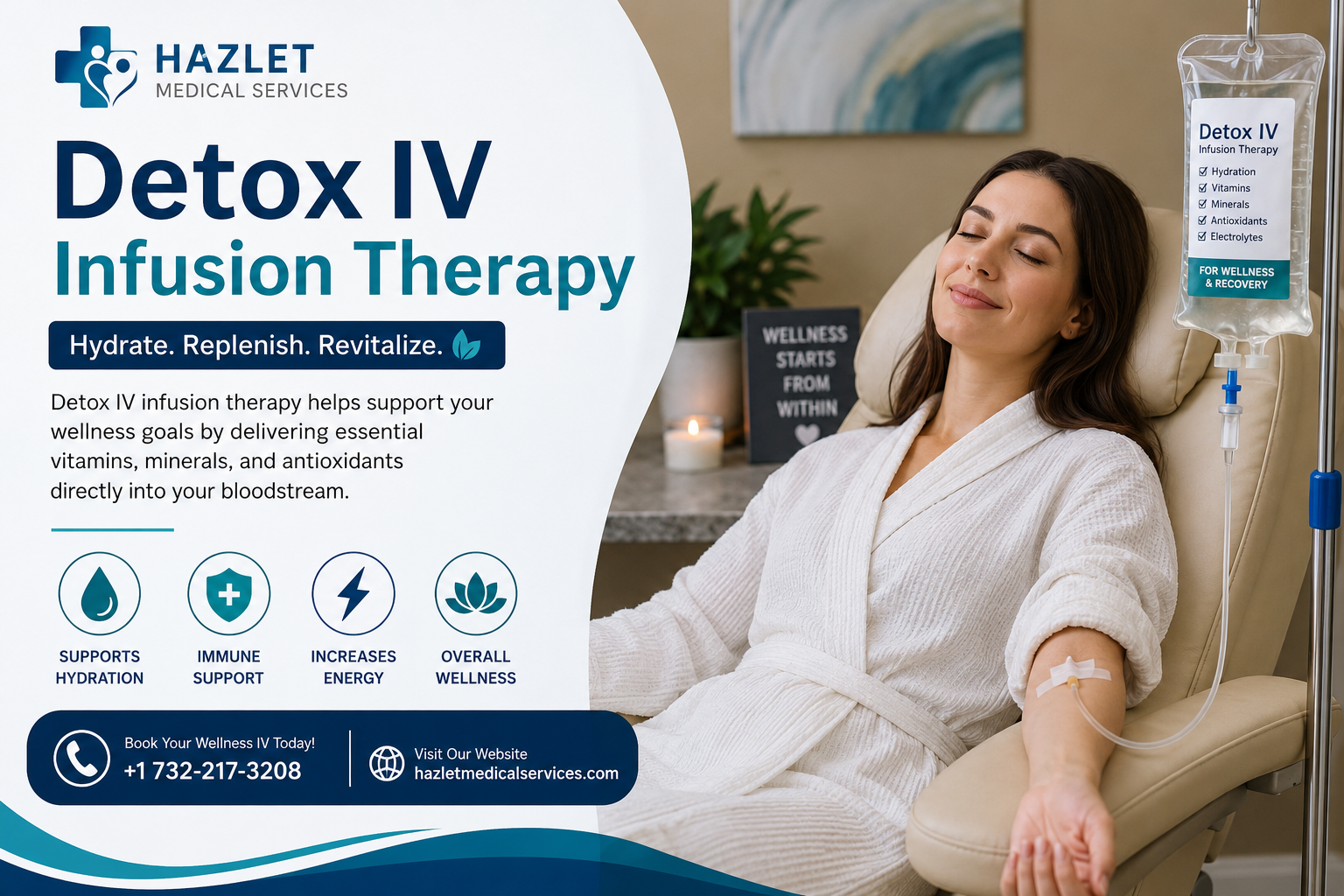
What Is Detox IV Infusion Therapy?
Detox IV infusion therapy generally refers to an intravenous wellness treatment formulated with ingredients intended to support hydration and overall wellness. The exact ingredients can vary depending on the treatment protocol and the individual's goals.Unlike oral supplements, which pass through the digestive system, IV therapy administers fluids and nutrients directly into the bloodstream. This makes IV treatment different from simply taking a vitamin or drinking a supplement.It is important to understand that the word "detox" is often used in the wellness industry. The body already has natural systems, including the liver and kidneys, that process and eliminate waste. An IV infusion should not be viewed as a replacement for these essential organs or as a cure for illness.Instead, an appropriately selected infusion may be used as part of a broader wellness plan focused on hydration, nutritional support, and feeling better.
Why Do People Consider IV Infusion Therapy?
People may explore IV therapy for different wellness goals. Some are interested in supporting hydration after travel or physically demanding activities. Others may want nutritional support as part of a broader wellness routine.Potential reasons someone may discuss IV therapy with a qualified provider include:
- Supporting hydration
- Complementing a wellness routine
- Providing selected vitamins or nutrients
- Supporting recovery after demanding activities
- Addressing lifestyle-related fatigue in appropriate situations
- Supporting antioxidant intake when clinically appropriate
- Creating a personalized wellness plan
The right treatment depends on the individual's health history, medications, nutritional status, and goals. IV therapy is not appropriate for everyone, which is why an evaluation by a qualified healthcare professional is important.
How Does an IV Infusion Work?
Before an infusion, a healthcare professional should review relevant health information and determine whether IV therapy is appropriate. The selected infusion is then administered through a small IV catheter placed into a vein.During treatment, the infusion flows gradually into the bloodstream. The length of the appointment can vary based on the formulation and clinical protocol.Many people appreciate that IV therapy can be incorporated into a wellness appointment without requiring a complicated recovery period. However, individual experiences vary, and patients should always follow the instructions provided by their healthcare professional.
What Ingredients May Be Included?
IV formulations vary. Depending on the treatment plan, an infusion may include fluids, electrolytes, vitamins, minerals, antioxidants, or other ingredients.One ingredient frequently discussed in wellness settings is glutathione.
Glutathione IV Infusion Therapy
Glutathione IV infusion therapy uses glutathione, an antioxidant naturally produced by the body. Glutathione is involved in several cellular processes, including antioxidant defense.Some wellness programs include glutathione as part of an IV infusion protocol. However, it is important not to assume that an infusion will produce a specific cosmetic, detoxification, or disease-treatment result. The appropriate use of glutathione depends on individual circumstances and professional guidance.A qualified provider can explain what is included in an infusion and whether it fits your health and wellness goals.
Methylene Blue IV Infusion Therapy: Why Professional Guidance Matters
Another ingredient that may be discussed in certain wellness or medical settings is methylene blue.Methylene blue IV infusion therapy is different from a standard vitamin infusion and requires careful medical consideration. Methylene blue has established medical uses, but it can also have important medication interactions and contraindications.For example, methylene blue can interact with certain medications, including some medicines that affect serotonin levels. Because of these potential risks, it should never be treated as a casual wellness supplement.Anyone considering methylene blue should disclose all medications, supplements, allergies, and relevant health information to their healthcare provider. A professional evaluation is essential before this type of treatment is considered.
Who May Be Interested in Detox IV Infusion Therapy?
There is no single type of person who seeks IV wellness treatments. Adults may consider them for a variety of lifestyle and wellness reasons.For example, someone with a demanding schedule may be interested in hydration support. Another person may be looking for a wellness treatment that complements regular exercise, balanced nutrition, and healthy habits.However, IV therapy should not be used simply because it is popular. A treatment should have a reasonable purpose for the individual receiving it.People who are pregnant, have kidney or heart problems, have certain medical conditions, take multiple medications, or have a history of complications with IV treatment should discuss their situation carefully with a healthcare professional before receiving an infusion.
Detox IV Infusion Therapy and Hydration
Hydration is one of the most straightforward reasons people consider IV fluids.Water and electrolyte balance are essential for normal body function. In some circumstances, intravenous fluids can provide hydration efficiently. However, IV therapy is not automatically better than drinking water for a healthy, adequately hydrated person.For everyday hydration, drinking sufficient fluids and maintaining a balanced diet are generally fundamental. IV therapy may be considered when there is a specific clinical or wellness reason for it.A responsible wellness program should focus on the individual's needs rather than presenting IV therapy as a universal solution.
How Hormone Wellness Can Fit Into a Broader Plan
Wellness concerns sometimes extend beyond hydration. People may also experience changes in energy, sleep, mood, metabolism, or other aspects of wellbeing. These concerns can have many possible causes, including lifestyle factors and hormonal changes.A wellness hormone clinic Hazlet approach may involve discussing symptoms, health history, lifestyle factors, and appropriate testing before considering any hormone-related treatment.
Hormone Therapy in NJ
Hormone therapy in NJ should be approached as a medical treatment rather than simply a wellness trend. Hormonal treatment is individualized, and the potential benefits and risks depend on the person's age, symptoms, medical history, laboratory findings, and treatment goals.Anyone considering hormone therapy should receive an appropriate evaluation and discuss potential risks, benefits, alternatives, and monitoring requirements with a qualified healthcare professional.
Hormone Balance Treatment
Hormone balance treatment is another phrase commonly used when discussing symptoms associated with hormonal changes. However, hormones are complex, and symptoms such as fatigue, sleep changes, weight changes, or mood changes can have many different causes.Rather than assuming that hormones are responsible, a qualified provider can help determine whether further evaluation is appropriate. Treatment should be based on medical assessment rather than a generic "balance" approach.
What Are the Potential Benefits of IV Wellness Treatments?
The potential benefits depend heavily on the specific infusion and the individual receiving it. For appropriate candidates, IV therapy may provide:
- Direct administration of fluids and selected nutrients
- Convenient hydration support
- A personalized approach to wellness
- An opportunity to discuss broader health goals with a healthcare professional
- Complementary support alongside healthy lifestyle habits
It is important to avoid exaggerated claims. IV therapy is not a replacement for nutritious food, adequate sleep, physical activity, preventive healthcare, or treatment for an underlying medical condition.
Is Detox IV Infusion Therapy Right for Everyone?
No. IV therapy is not suitable for every person.Before treatment, patients should provide accurate information about:
- Current medications
- Vitamins and supplements
- Allergies
- Existing medical conditions
- Previous reactions to IV treatments
- Pregnancy or breastfeeding status, when applicable
- Relevant medical history
This information helps the healthcare professional determine whether an infusion is appropriate and whether the formulation needs to be adjusted.Possible IV-related side effects can include discomfort, bruising, irritation, infection, inflammation, or other complications. Reactions to individual ingredients are also possible.
Choosing a Professional IV Therapy Provider in Hazlet
Choosing a qualified provider is an important part of receiving IV therapy responsibly. Patients should look for a healthcare setting that emphasizes individualized assessment rather than making broad promises.A professional approach should include an opportunity to discuss your goals, medical history, current medications, and questions before treatment.At Hazlet Medical Services, the goal is to provide wellness services in a professional healthcare environment while helping patients understand their available options.
Supporting Your Wellness Beyond IV Therapy
IV therapy works best when considered as one component of an overall wellness strategy.Healthy habits remain important, including:
Eat a Balanced Diet
A varied diet provides many of the nutrients your body needs for normal function. Whole foods, vegetables, fruits, lean proteins, healthy fats, and appropriate sources of carbohydrates can all contribute to balanced nutrition.
Stay Hydrated
Regular water intake is essential for everyday health. Your hydration needs can change with exercise, weather, diet, and other factors.
Prioritize Sleep
Consistent, quality sleep supports many aspects of physical and mental wellbeing. Establishing a regular sleep schedule can be a valuable part of a wellness routine.
Stay Physically Active
Regular physical activity supports cardiovascular health, strength, mobility, and overall wellbeing. Exercise should be appropriate for your current health and fitness level.
Maintain Regular Medical Care
Wellness treatments should complement—not replace—routine medical evaluations and appropriate treatment for health conditions.
Why Personalized Care Matters
There is no universal IV infusion that is right for everyone. A treatment that may be appropriate for one person may not be suitable for another.That is why personalized assessment matters. Your healthcare provider can consider your health history, medications, symptoms, goals, and other factors before recommending a treatment.This approach is particularly important when an infusion contains ingredients that can interact with medications or affect specific medical conditions.
Conclusion
Detox IV infusion therapy can be considered as part of a personalized wellness plan for appropriate individuals, particularly when the goal is hydration or delivery of selected nutrients under professional supervision. It should not be presented as a cure-all or a replacement for the body's natural detoxification systems.For people interested in broader wellness services, options may include glutathione-based IV treatments, carefully evaluated specialty infusions, and consultations related to hormonal health. At Hazlet Medical Services, patients can discuss their individual goals and receive guidance about which services may be appropriate for their needs.The best wellness strategy is one that combines professional medical guidance with sustainable habits such as good nutrition, hydration, exercise, quality sleep, and regular healthcare.
Frequently Asked Questions
1. What is detox IV infusion therapy?
Detox IV infusion therapy generally refers to an IV wellness treatment containing fluids and selected nutrients or other ingredients. The exact formulation varies, and treatment should be determined based on individual needs and professional evaluation.
2. How long does an IV infusion take?
Treatment time can vary depending on the specific infusion, ingredients, and clinical protocol. Your healthcare provider can explain the expected appointment length before treatment.
3. Is IV therapy suitable for everyone?
No. Certain medical conditions, medications, allergies, pregnancy, and other factors may affect whether IV therapy is appropriate. A professional evaluation should be completed before treatment.
4. What is glutathione IV infusion therapy?
Glutathione IV infusion therapy delivers glutathione, an antioxidant naturally produced by the body, through an intravenous infusion. Whether it is appropriate depends on the individual's circumstances and treatment goals.
5. Is methylene blue IV infusion therapy the same as a vitamin IV?
No. Methylene blue is a specific medication with established medical uses and important potential interactions. It requires careful professional evaluation and should not be treated like a routine vitamin supplement.
6. Can IV therapy replace a healthy diet?
No. IV therapy should not replace a balanced diet, regular hydration, exercise, adequate sleep, or routine medical care. It should be viewed as a complementary treatment when clinically or professionally appropriate.
7. Can I combine IV therapy with hormone-related services?
This depends on your health history, medications, current treatments, and individual goals. Discuss all treatments and supplements with your healthcare provider so potential interactions and safety concerns can be evaluated.
